

Updated: March 2026
Let’s be honest: nail trimming is one of those things that a lot of dog guardians avoid because it feels too hard.
And you know what? Most dogs don’t like it either. Some are even downright upset about it, but it really does need to be done, and more often than at your annual vet visit.
Whether you want to learn how to do it yourself, or you want to prepare your pup for their professional groomer visits, with patience, with the right approach, and a healthy respect for how your dog is actually feeling, nail trims can go from a dreaded battle to a calm, manageable, maybe even a positive experience.
Why are short nails so important?
The truth is, long nails have real consequences for your dog’s physical health and comfort
- Long nails can be slippery on certain surfaces, especially hardwood or linoleum flooring, increasing the risk of injury as well as frustration for your dog.
- Long nails affect the way a dog stands and moves. They shift weight distribution across the paw and put pressure on the feet, legs, and joints in a way they aren’t meant to handle.
This can actually cause pain and discomfort that can (over time) contribute to serioius muscle, bone, and ligament damage. - Long nails are more likely to snag, rip, or splinter, which is as painful as it sounds. And when nails are left to grow unchecked, they can actually curve and grow into the paw pad, becoming embedded.
- When nails become overgrown, they can actually curve and grow into the paw pads, becoming embedded.
That means infection, a vet visit, and a dog who now has an even stronger reason to distrust anything coming near their feet. - And, well, nobody likes to be scratched by long dog nails. They can hurt both canine playmates and humans, along with floors and furniture, if not kept at a shorter length.
Here’s an excellent (and 15 min) video from Dr. Leslie Woodcock, a Veterinary Rehabilitation Specialist and Agility Team Canada Veterinarian, on why regular nail trims (about every two weeks!) matter so much:
Video: Dr. Leslie Woodcock via Susan Garrett’s website
But Before You Touch a Single Nail…
There are different ways to keep your dogs nails short, there are a few types of clippers, dremels, and scratch boards. I’ve found a few great videos for each type that I will share below, however first, it’s important to know that no matter what tool you use, the work starts long before you ever pick it up.
Rushing this step is the number one reason dogs develop a fear of nail trims in the first place.
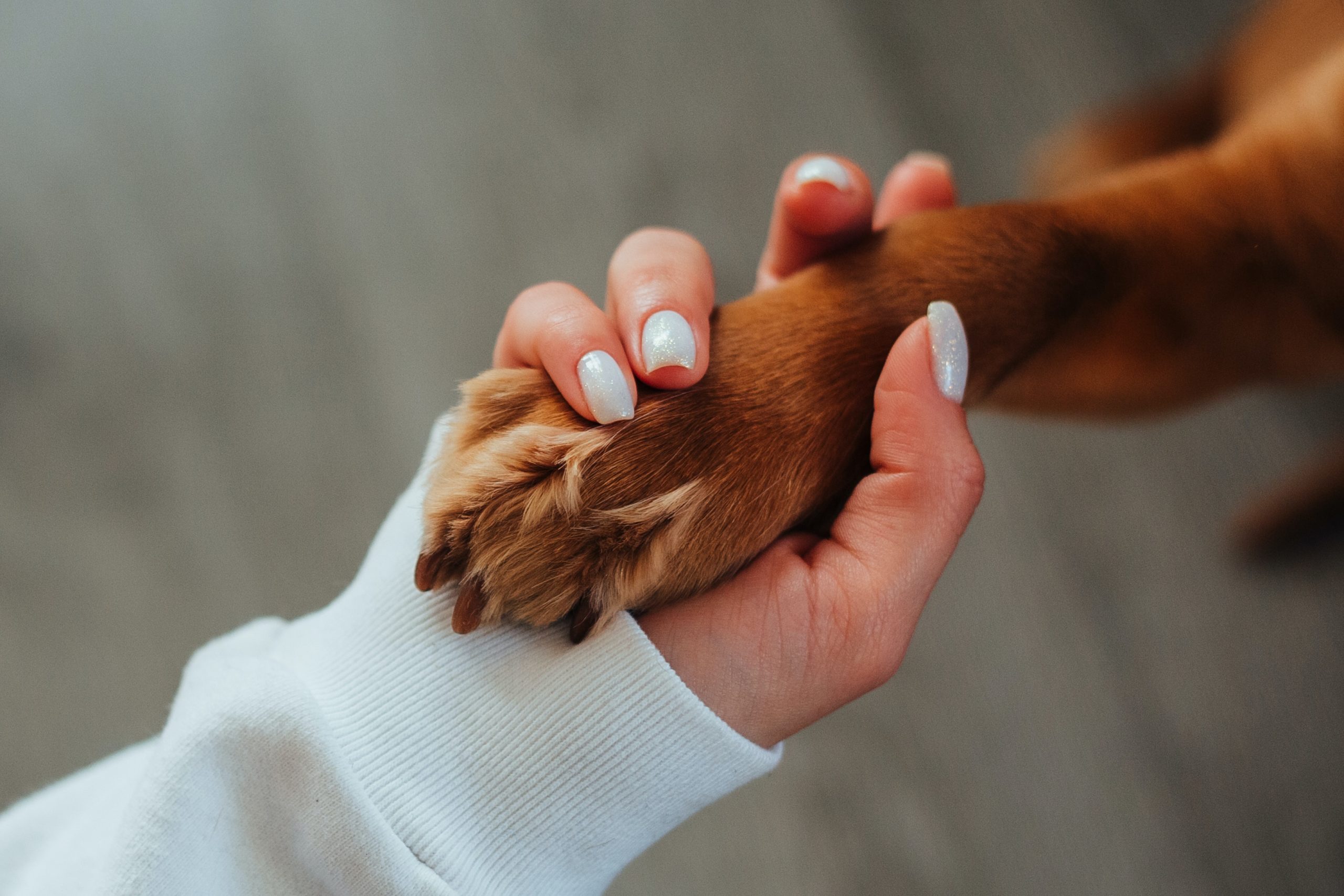
Start by simply touching your dog’s paws. Gently. Frequently. And always followed by something good, a treat, praise, a quick game. You’re building an association: paws being touched = good things happen. Do this from the very first day your dog comes home with you. The earlier, the better.
This is a core principle of Fear Free handling: meeting your dog where they are emotionally, and moving at a pace that keeps them feeling safe. As a Fear Free Certified Professional Trainer, this isn’t just something I teach, it’s something I practice in every single interaction I have with a dog.

1 – Introduce the tools gradually.
Before you use anything, let your dog sniff and investigate the clippers or dremel.
Put them on the floor.
Let your dog choose to approach them. When they do, mark (click if you use a clicker, or say “yes”, and reward.
Pair the whole experience with treats.
There’s no rush.
2 – Desensitize to the sound.
Turn the dremel on near your dog (BUT not touching them) and reward calm behaviour.
Or open and close the clippers.
Let the sound become background noise rather than a warning signal.
Pair it with good stuff every single time.
3 – Touch and treat.
Hold your dog’s paw briefly and immediately offer a treat.
Release.
Repeat.
Gradually increase the duration, always rewarding.
You’re teaching them that having their paws held predicts good things, not scary ones.
Step by Step: Working Up to the Trim
Start small.
One nail.
Maybe two.
Not a full paw, not all four paws.
One nail, a big reward, and you’re done for the day.
Build from there, session by session, at your dog’s pace.
Reading Your Dog: The Most Important Skill of All
This is where I want to slow down, because it matters more than any technique I could teach you.
Your dog is communicating with you throughout this entire process. They’re telling you how they feel through their body, their breathing, their posture, their eyes. Learning to read those signals is the difference between building trust and accidentally eroding it.
Learn what your dog is telling you with their body communication with Learn to *Speak* Dog
If you notice signs of stress, discomfort, or anxiety
such as a lip lick, a yawn, whale eye, a stiffening body, attempts to pull away:
stop.
Not as a punishment, and not in frustration.
Just stop.
Give your dog a jackpot of their favourite treats. Do something fun together like a quick game, a sniff in the yard, scatter feed, whatever makes them happy and calms them. And then put the clippers away and try again another day.
Ending on a good note isn’t giving up. It’s the smartest training move you can make. It tells your dog:
you are safe here, and I am listening.
That trust is the foundation everything else is built on.
Staying Calm Matters More Than You Think
Just a note that dogs are incredibly attuned to our emotional states. If you walk into a nail trim session tense, rushed, or already anticipating a battle, your dog will feel it. They’ll walk in already on alert before you’ve even picked up the clippers.
Breathe.
Go slow.
Use a calm, happy tone.
And if you’re having a frustrated day, honestly?
Skip it.
Come back tomorrow.
Your dog will thank you.
Now For the Videos on Each Tool I Mentioned Above:
Finding a Groomer You Can Trust
If DIY nail trims genuinely aren’t working for you and your dog right now, a good groomer can be a wonderful ally, if you find the right one.
Not all groomers are the same, and the last thing you want is to hand your already-nervous dog over to someone who will make things worse. Here’s what to look for:
- A great grooming salon will have an open-door policy and welcome you to visit before booking. Ask for a tour. Ask which groomer is most experienced with anxious dogs, specific breeds, or any particular needs your dog has.
- An ethical groomer will be affiliated with a professional association such as the National Groomers Association of Canada, the Atlantic Professional Groomers Association, the Canadian Association of Professional Dog Trainers, or the Pet Professional Guild.
In an unregulated industry, professional membership signals a genuine commitment to a standard of care. - Ask for testimonials from real clients, specifically about how their dog feels and behaves arriving to and leaving from appointments.
A dog who trots happily through the door tells you everything. - And speaking of reading your dog: learning body language isn’t just important for nail trims. It’s important for every single interaction your dog has with a professional.
Other Grooming: Setting Your Dog Up For Success
The same principles that apply to nail trims apply to every aspect of grooming. Here’s a quick overview of the other areas worth working on proactively … especially with puppies.
Introducing grooming tools and handling.
Everything your puppy experiences during their critical socialization window (roughly 7–16 weeks) shapes their future responses. Handle their paws, touch each toe individually, play with their tail, gently hold their ears, slide your fingers along their teeth, always following each touch with a treat.
Go gently, and if your puppy pulls away or shows stress, take a break and come back when they’re calm and relaxed.
Happy visits to the groomer.
Once your puppy has had their third round of vaccinations and the shop follows proper sanitation protocols, start visiting for short, positive experiences, not full grooms. A cuddle and some treats in the tub. Playing tug while the blow dryer runs in the background. Working on a stuffed Toppl while getting their nails done. You want “going to the groomer” to mean something wonderful before it ever means a bath.
Introducing the blow dryer.
We never start with putting the dryer directly on your dog. First, we let them hear it in the background first, paired with treats. When they’re comfortable with the sound, try the cool/low setting aimed at their back and shoulders, then work outward gradually from there over multiple sessions. Many dogs genuinely enjoy the feeling of air on their body; others don’t, and that’s okay. Go at their pace.
Keep your hand between your dog and the dryer at all times, so that you can feel that, if your hand gets too warm, it’s too warm for them too. Avoid blow drying directly onto their face, and consider a Happy Hoodie to protect their ears. (Note: this link YHDC’s Amazon.ca Associate link)
Regular brushing.
Set aside time to brush or comb your dog a little each day — whether they technically need it or not. If they’re anxious about brushes or combs, start by letting them sniff and investigate the tools on the floor before you ever use them. Try starting with the back of the brush so there’s no pulling or tugging until they’re comfortable. Build up slowly. Your professional groomer can advise on what’s best for your dog’s specific coat.
Getting comfortable with baths.
Start before they ever need one. Let the tub become a familiar, positive space: treats in the tub, play near the tub, no water at first. When you do introduce water, go slowly and make it fun. The goal is a dog who steps into bath time without dread.
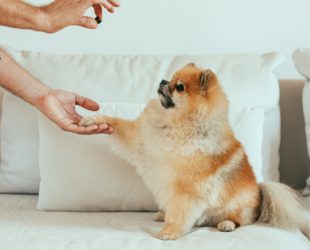
All of these things take time, patience, and consistency, but every minute you invest in building positive associations early is time you won’t have to spend undoing fear later.
And if things start to go sideways at any point, with any of it, that’s what I’m here for.
Bonus:

FearFree® Pets Webinar Series
In 2020, while everything was shut down, there was a great need to DIY Grooming of pets.
FearFree® Pets created this 45 minute long, incredibly informative, webinar series on grooming at home.
Presented by Fear Free Certified Professional Trainer and Groomer Daniel Josselyn-Creighton – KPA CTP, this webinar will help you to:
- Introduce new pieces of equipment (brushes, clippers, etc.) and procedures (baths, brushing, and nail trims) to your dog in a safe, fear-free manner.
- Teach your dog impulse control games to help them be more comfortable sitting still for simple procedures.
- Perform basic grooming tasks: brushing, bathing, trimming hair, and nails.
- Use the FAS scale to know when you can continue with a procedure, when you need to proceed with caution, and when you need to stop and give your dog a break.