
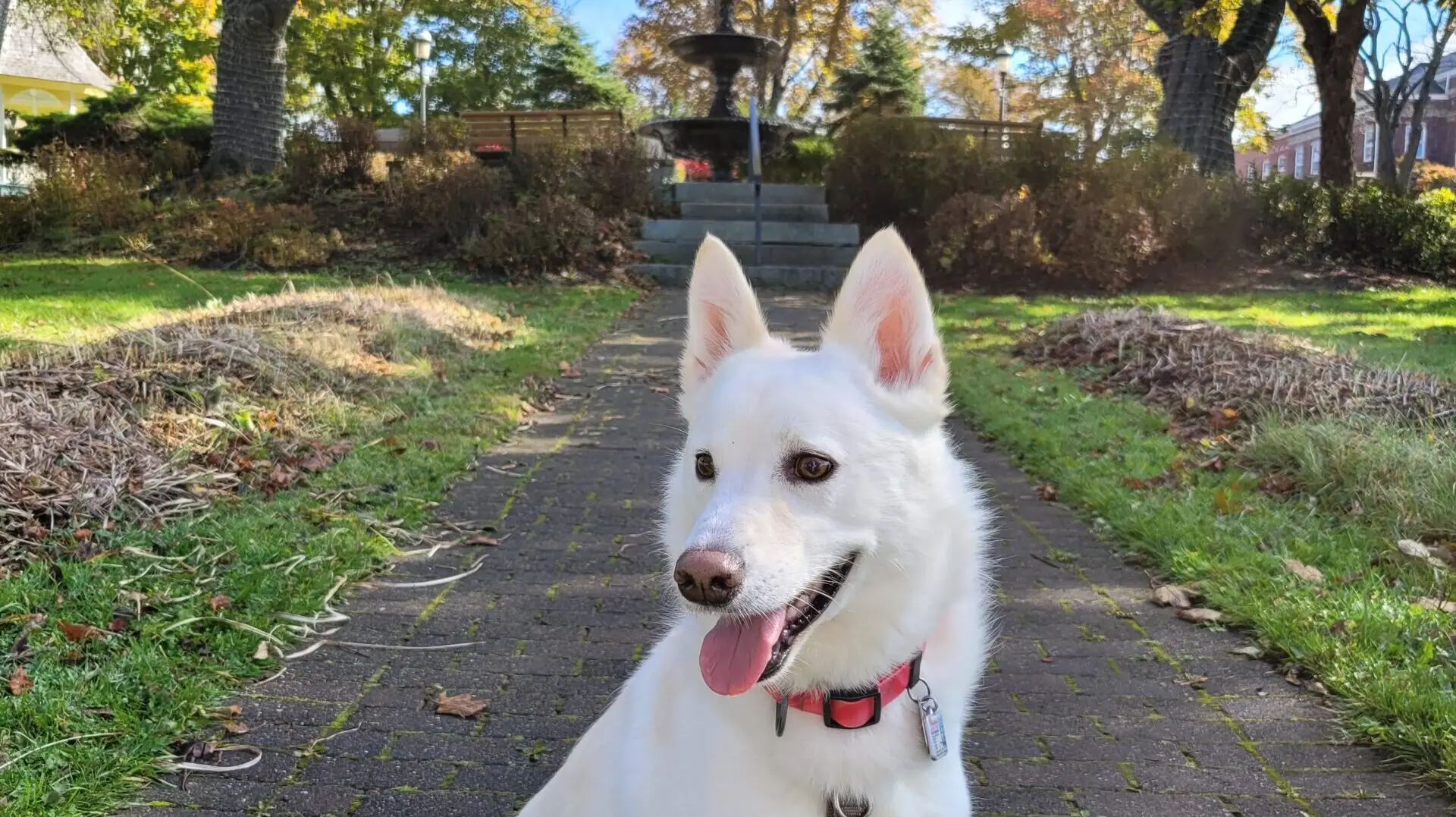



Freddy’s guardians ask questions such as:
 “How is this interaction with our four year old rescue dog?” (via a video) “How do we help Freddy and our senior beagle (16 years in May!) feel safe and secure so they can be comfortable with each other?” “Can you advise us on building trust, training, separation anxiety prevention, body language, and cues?”
Freddy’s humans focus on careful, closely monitored interactions, making sure they are short and positive,
while keeping an eye on when play goes from reciprocal to “maybe I’ll just eat you”.
(Their words  and I think we can all relate!)
Freddy’s people also:
work on parallel activities like practicing sit, lickimats, chews, and engagement. work on things like trading a stolen mitten for something more appropriate that Freddy IS allowed to chew on. send more videos asking “what does this high pitched squeal mean?” when one dog is chasing the other. ask when to add verbal cues (or if they even need to) when playing engagement games. ask for guidance in introducing socialization props such as ball caps, umbrellas, jackets or sweaters with hoods up, and more. ask how to continue to build confidence and secure connections
Freddy’s humans already know that learning commands and cues are NOT the most important part of his learning at this stage.
That building confidence is more important. That focusing on connections and bonds with Freddy’s house mates (both human and canine) is a higher priority than ‘come’, ‘stay’, or ‘leave it’. That teaching this new puppy that he is safe, secure, and loved is the most important part.
You see, puppies need connection and safety.
All the other stuff comes after.
Sometimes it can be really tempting to send a puppy to someone else to train.
Taglines like”From foundation to focused obedience: let us build the skills so you can focus on building the relationship.” sure are appealing, I get it.
But here is the issue with that:
 When you send your puppy away to be trained by someone else, they don’t learn physical and emotional safety. They don’t learn predictable routines, gentle handling, protection from overwhelm, and that their humans will step in before things get scary or confusing.
 They miss out on important opportunities to build secure connection.
Instead of consistent caregivers who respond to their needs, help them regulate big feelings, and become a reliable base, they are spending that crucial time with a stranger and confidence is built through support, as well as proper, careful exposure. When at a boarding facility, there is rarely the opportunity for regulation support. Your see, puppies don’t self-regulate well and they need consistent supervision from humans to notice when they’re tired, over-aroused, unsure, or stressed and adjust the environment accordingly. There is very little choice and agency from those who offer board and trains. Puppies don’t learn that they’re allowed to opt out, take breaks, and explore at their own pace, which is what teaches puppies that the world is safe and that their signals matter. When those board and trains also include doggy day care, they don’t necessary have the opportunity for developmentally appropriate experiences. Puppies require short, positive, carefully curated interactions, not flooding, not forced “socialization,” or being expected to cope in adult-sized situations.
And I didn’t even touch on the super important socialization period windows!
Puppies are born ready to learn, but there are critical periods when their brains are especially receptive to experiences that shape their behaviour for life.
Sending them to someone else to train during these important windows of their development risks missed opportunities for secure attachment and healthy social development, whereas puppies who go through this period with their humans develop confidence, adaptability, and stronger lifelong bonds.
When puppies feel safe and connected, learning happens naturally.
That’s the piece that often gets skipped, and it’s the most important one.
(Now for the sales pitch – which I hate doing, by the way  I’m really bad at making a living doing this):
If you would like the proper, appropriate guidance for your new puppy (who I bet is just as cute as Freddy… unless you ask his mom  ) please reach out. I would love to give your puppy some love, and give you some guidance, resources, and education so that your pup can grow up to be your best friend and a wonderful life long companion.
If not, no worries! You can follow along on Facebook and still learn tons of useful stuff!